
Andrade Castle
HISTORY
History of Andrade Castle
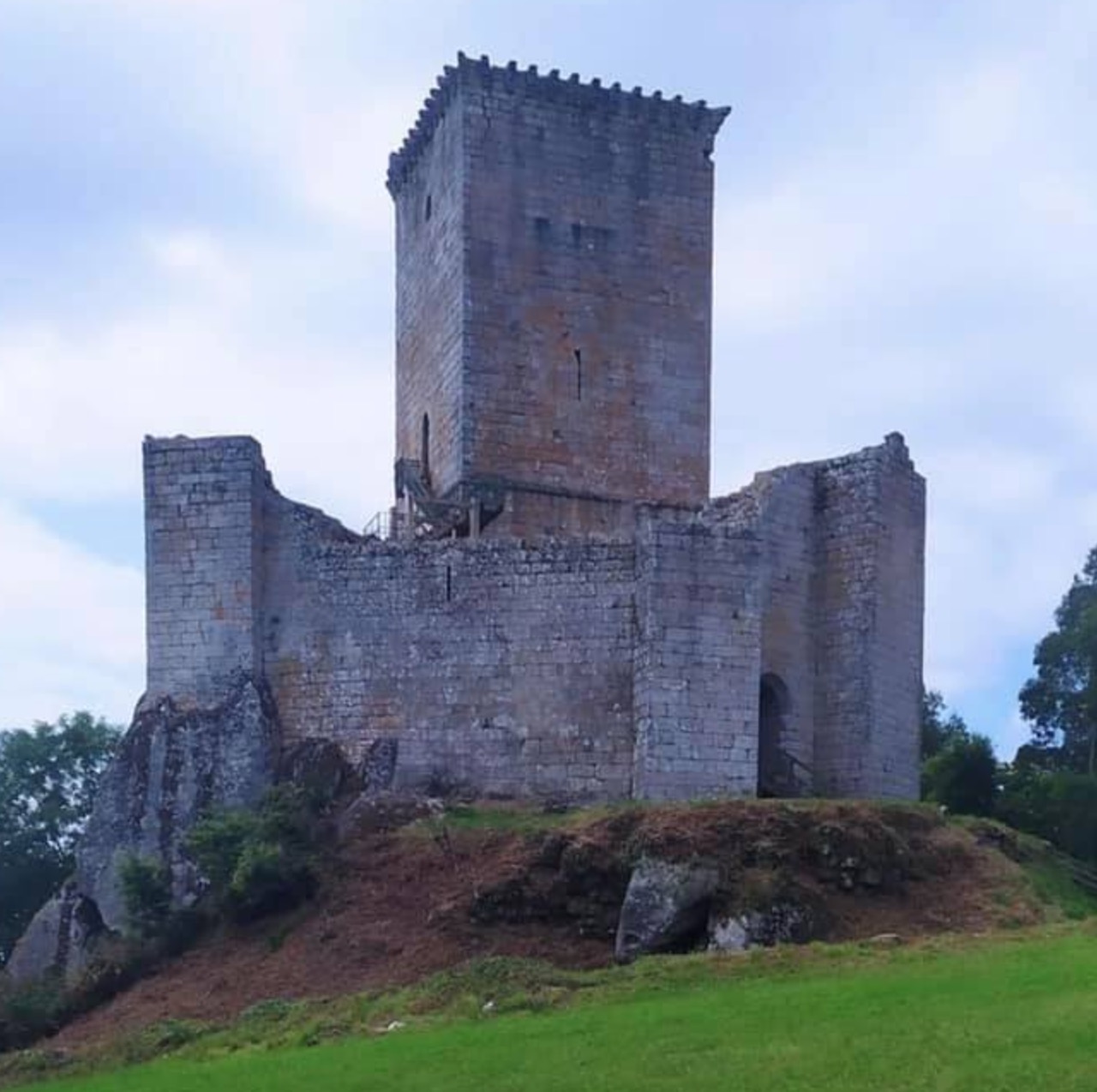
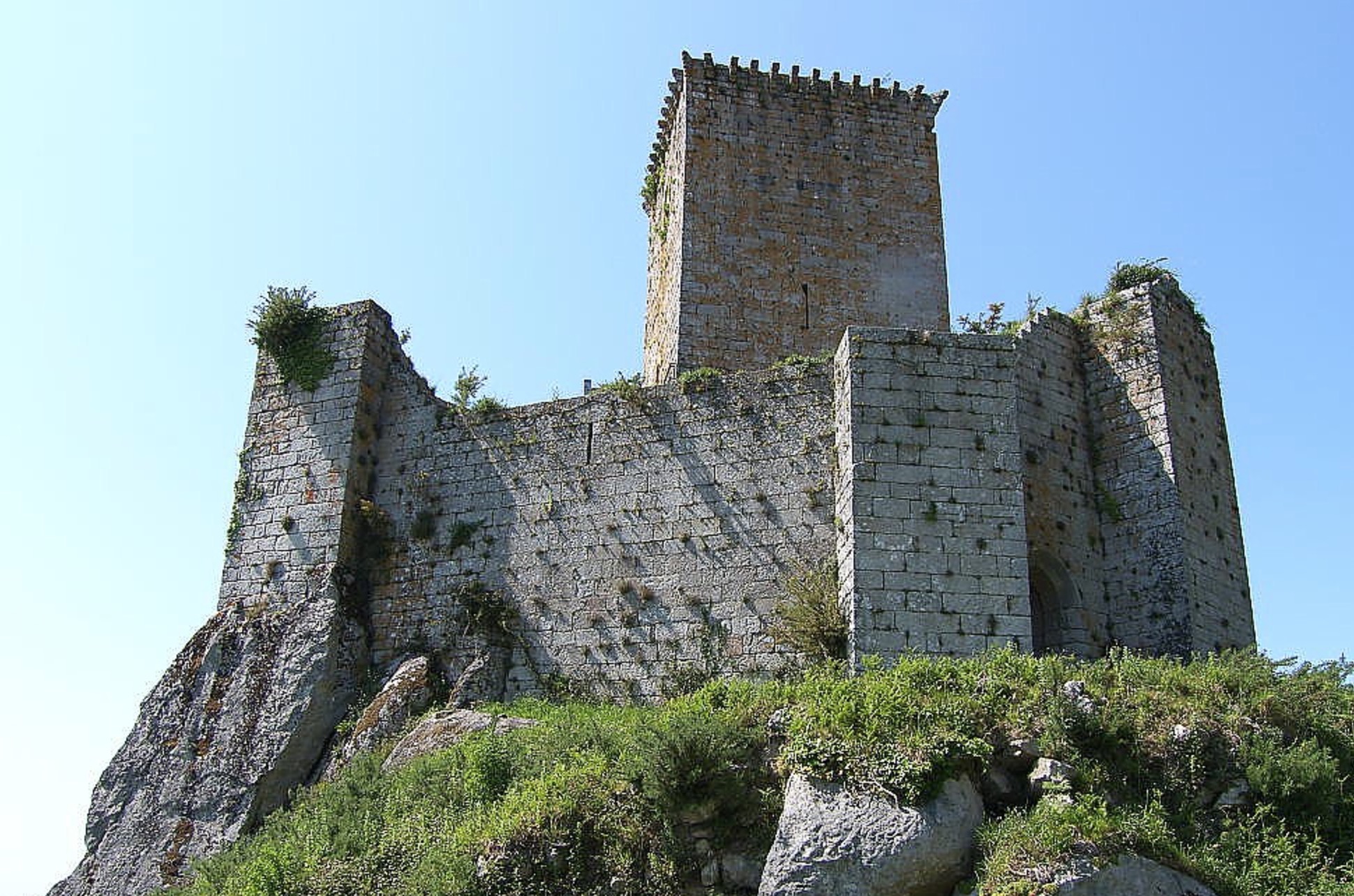
Perched atop the Leboreiro rock, Andrade Castle—also known as Castelo de Nogueirosa—commands sweeping views of the valley and river below. Constructed by Fernán Pérez de Andrade between 1369 and 1377, the castle stands as a testament to the region’s medieval heritage.
While much of the structure remains in ruins, the keep is remarkably well preserved, suggesting its historic role as a prominent bastion or watchtower.
Visitor Information
- Opening Hours: Monday to Sunday, 11:00–14:00 and 17:00–20:00
- Admission: €1.45, including access to the summit and panoramic views
- Proximity: Casa do Castelo de Andrade is conveniently located just a five-minute walk (or one-minute drive) from Andrade Castle.
LEGEND
The Legend of Andrade Castle
Old military glory of the Middle Ages
Of solid construction, its walls barely pierced by narrow arrow slits, and strategic location, this rock castle was once a true gem as a watchtower of defense.
It is said that the rock on which it stands was polished in several parts to make it inaccessible, although the deep moat that surrounded it further complicated the task for the enemy. But it is clear that its main weapon of defense was its own situation.
From the top of the tower, which measures about 20 meters, one can see the rivers of Ferrol, Ares, and Betanzos. Thus, most of the lands of the Lordship of the Andrades were under its watchful eye.
Due to its small size and limited accommodation capacity, it barely served as a residence; in fact, the family and the small court lived in the Palace that existed in the town. Only in times of true danger did they retreat to the castle, and possibly they did so, if we believe the popular legend, through a subterranean path that is said to have connected the buildings.
The ancient castle witnessed bloody battles, such as the heroic uprising of the irmandiños who dismantled almost all the fortresses in Galicia, but could not overcome its walls. Nor did the passage of the centuries end this stone construction; only its interior is completely destroyed. The tower had three floors, as indicated by the gaps where the beams were embedded. The upper one was covered by a stone vault that can still be seen today.
It was topped by a terrace that must have had battlements and machicolations in its time. According to a study conducted in 1903 by the Ferrolan general Andrés A. Comerma, in the lower part of the castle, which had two floors, were the accommodations: «…there are four windows in the walls: two in the E., one with two semicircular arches, a precise indication of family accommodation, and another with stone seats, like a lookout; and the other two in the W., one with seats and another that seems more like a defense». The parade ground must have been very small, and the only entrance door to the castle, defended by two small prism-shaped towers, was closed with a drawbridge and an inner double-leaf door. At the top, this access was crowned by the coat of arms of the Andrades, now practically worn away by the passage of time.
The Castle of Hunger (Legend)
As you pass in front of Andrade Castle, there are still peasants in the area who cross themselves saying: “May God have in glory those who died in the castle of hunger.” A respectful prayer that obeys the romantic and cruel legendary history, passed down from parents to children, about a horrible secret dungeon that is said to have existed in this fortress where two young lovers were buried alive. This is a legend of the Castle in Galicia.
It was at the end of the year 1389 when this castle was under the care of a robust and strong warden, somewhat presumptuous and infatuated, named Pero López. A violent and cruel man who planned and carried out the most horrible of revenges.
He had set his eyes on the young Elvira, maid of the Lady of Andrade, but she did not reciprocate his attentions as she was in love with Mauro, the Lord’s favorite page, being his illegitimate son. Both circumstances, being Elvira’s favorite and the Count’s, gradually fueled the flames of the deep hatred that Pero López came to profess for the young Mauro.
One afternoon, he went down to the Pazo de la Villa to settle some matters and there he saw Mauro and Elvira whispering and smiling. They mocked the love that the young woman had inspired in the old warden and, laughing, looked at him with disdain. Pero López, shaken with rage and jealousy, swore eternal hatred and began to plot his revenge, which he carried out a few days later with the greatest cold blood.
Helped by Zaid, a black slave who obeyed him blindly like a dog and who, for good fortune, was mute, he drugged and kidnapped the young lovers, transporting their unconscious bodies to a hidden underground chamber in the castle tower of which very few knew. It was accessed by descending some steep and crumbling stairs that led to a small, damp, and dark room. There, one of those moldy walls opened, manipulating a spring cleverly hidden, giving way to a foul and repugnant cell. Face to face, against two of the walls of the place, he deposited the bodies of the lovers, both shackled and tormented with wooden gags.
The two young people suffered for a long time the horrific martyrdom of contemplating each other in that situation from which they could not escape. Meanwhile, the Lord of Andrade vainly tried to find the whereabouts of his beloved page and his wife’s maid, but as the days passed, he began to heed the gossip of the people and believed that they had fled together.
After months, one summer morning, Pero López was brought to the Pazo de la Villa badly injured. He had had a fight with a squire due to a certain prank that the girl of this had done. And when the Count went to see him on his deathbed, he heard from the warden the confession of his horrible crime, whose remorse terrified him at that fatal hour of his life: “My Lord, I ask for forgiveness. I was the one who, out of envy and temper, enraged by Elvira’s disdain, locked her and your page Mauro in the underground of the tower… My intention was not to end their lives, but to avenge my broken heart by causing deep suffering to the lovers. The black slave brought them food until one day Mauro managed to free himself from the chains and struck him with the iron, leaving him badly injured. But while the boy went to free Elvira, the faithful Zaid crawled to reach the postern and, although he fell dead at the entrance of the dungeon, he had time to close the wall preventing the young people from escaping. After hours, when I missed him, I went down to the underground and found the dead black man, with his head smashed and bloodied… I was terrified, My Lord! I understood what had happened and I did not dare to open the wall ever again, and the unfortunate ones died of hunger!…”
Faced with such a horrifying tale, the Lord of Andrade buried his dagger in the chest of the murderer of his son, taking away the little life that remained in him. Then he ran to the underground of the castle, shedding tears of despair, and there he discovered the bodies of the two lovers, who were found together in an embrace of eternal farewell. After giving them a nearly royal burial in the Villa, the Count locked himself in his castle and spent the remaining days of his life crying for that beloved son, who died so young and in such a horrific way.